
Our Heritage
History of Burnham on Crouch
A town shaped by the sea, the salt marshes, and centuries of maritime tradition.
A Town Steeped in History
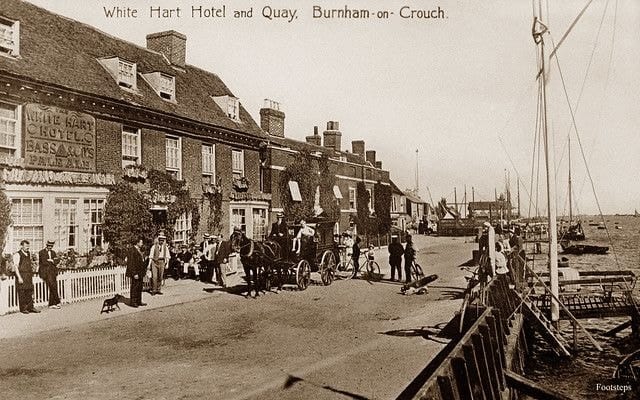
Burnham on Crouch sits on the north bank of the River Crouch, a tidal estuary that has defined the town's character for over a thousand years. Its name derives from the Old English 'burna', meaning stream, and the town's fortunes have always been tied to the water.
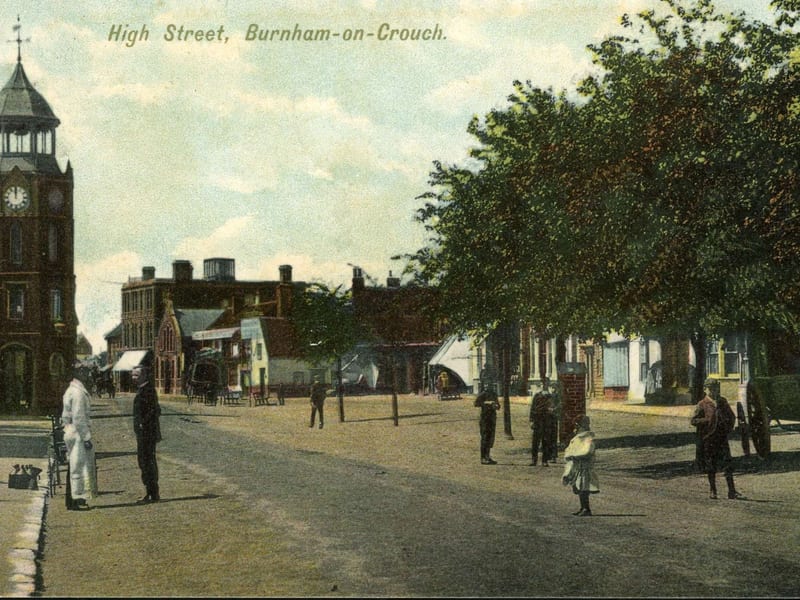
From its origins as Roman oyster farm (they laid the first beds as a cheap source of food for the townsfolk), then a small Saxon settlement, Burnham grew steadily through the medieval period, becoming an important centre for fishing, oyster dredging, and coastal trade. During the Black Death, our local sailors bravely took the barges of Burnham and Bradwell from the Crouch, through he tributaries connecting to the Thames, they were only barges to deliver produce to London during the plague, a service for which the King accorded privilege trade status in the years to follow. These same waters later during the Napoleonic wars became famous for smugglers and pirates bringing in contraband like arms, gunpowder, gin and wool along the Essex coastlines and into London. The town's distinctive clock tower, built in 1877, remains one of its most recognisable landmarks.
Saxon Origins & Medieval Growth
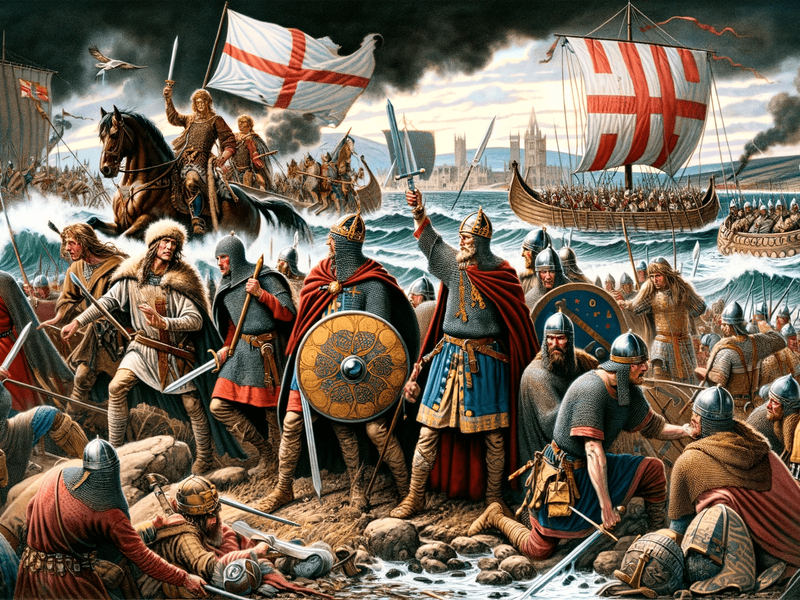
Evidence of settlement in the Burnham area dates back to the Saxon period, with the parish church of St Mary the Virgin standing as one of the oldest surviving structures. The church's Norman tower speaks to the town's growth in the 11th and 12th centuries, when it served as a modest but thriving agricultural and fishing community.
The parish church of St Mary the Virgin dates to the 12th century and contains features from several periods of English ecclesiastical architecture.
The Oyster Trade & Fishing Heritage
For centuries, the River Crouch and its surrounding creeks were rich in native oysters. Burnham's fishermen worked the estuary beds, supplying oysters to London markets and beyond. The oyster trade brought prosperity to the town through the 18th and 19th centuries, and the legacy of this industry can still be seen in the names of local streets and the layout of the quayside.
At its peak in the Victorian era, Burnham's oyster fleet numbered dozens of smacks working the Crouch and Blackwater estuaries.
The Railway & Victorian Expansion
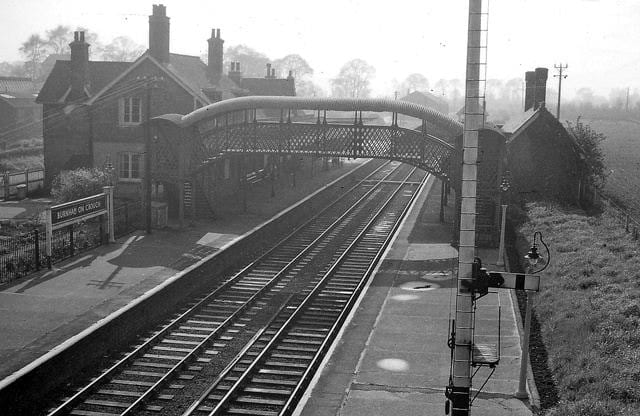
The arrival of the Great Eastern Railway branch line in 1889 transformed Burnham on Crouch. Suddenly accessible from London, the town became a popular destination for day-trippers and wealthy Londoners seeking a sailing retreat. Victorian villas sprang up along the waterfront, yacht clubs were founded, and Burnham's reputation as 'the Cowes of the East Coast' was born.
The railway branch line from Wickford to Burnham on Crouch opened on 1st October 1889 and remains in operation today.
The Clock Tower & Town Centre
Burnham's iconic clock tower was erected in 1877 as a gift to the town and stands at the heart of the High Street. The Victorian high street retains much of its original character, with independent shops occupying buildings that date back two centuries. A walk along the High Street is a journey through the architectural history of a prosperous Essex market town.
The clock tower was built in 1877 and is Grade II listed, forming the centrepiece of Burnham's conservation area.
The World Wars & Modern Era
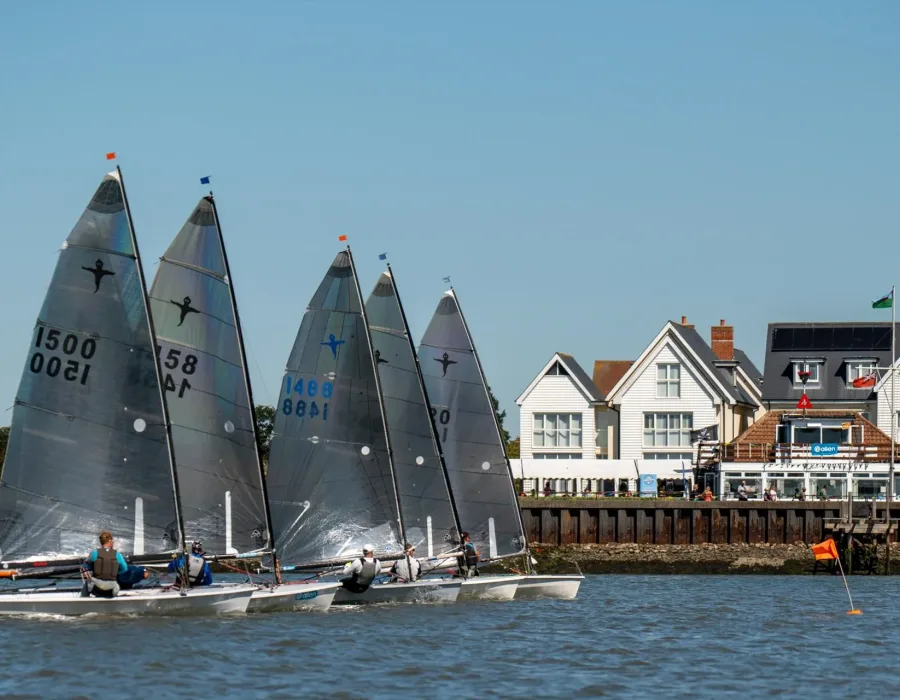
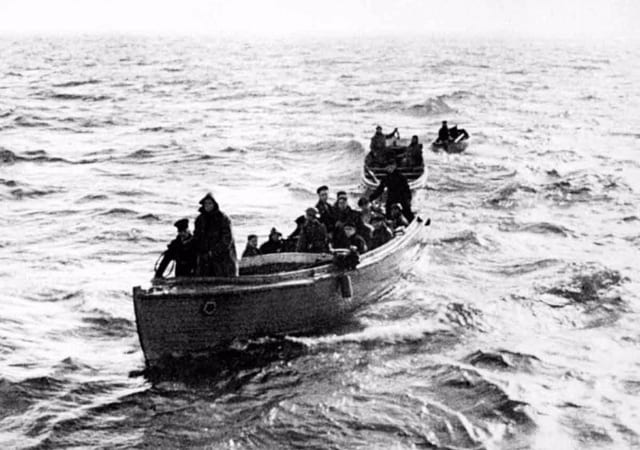
Like many English coastal towns, Burnham on Crouch played its part in both World Wars. The estuary was used for naval operations and the town hosted evacuees during the Second World War. In the post-war decades, sailing and leisure boating grew to become the town's defining industry, cementing its status as one of England's premier yachting destinations.
Among Burnham's most poignant contributions to the Second World War was the role played by three of its small vessels during Operation Dynamo in May and June 1940. When the call went out for civilian boats to help evacuate British and Allied troops trapped on the beaches of Dunkirk, three Burnham craft answered. They joined the extraordinary flotilla of 'little ships' that crossed the Channel under fire to bring soldiers home from the beaches. Tragically, one of the three never returned — lost to the chaos and danger of that desperate evacuation. The sacrifice of that vessel and her crew stands as a lasting reminder of the courage shown by ordinary people from this small Essex town in one of the war's defining moments.
During World War II, the River Crouch was used as a base for coastal defence, boat building fast motor torpedo boats and patrol, operations and minesweeping vessels.
Key Dates in Burnham's History
Saxon settlement established near the River Crouch
Burnham recorded in the Domesday Book
St Mary the Virgin church constructed
The iconic clock tower erected on the High Street
Great Eastern Railway branch line opens
Royal Corinthian Yacht Club founded
Three Burnham vessels join the Dunkirk evacuation — one does not return
Burnham Week regatta established as an annual event
Town centre designated a Conservation Area